The Feb. 21 edition of Greasy Tracks featured an aural trip down memory lane as we traced the history of the Flying Burrito Brothers and the advent of country rock.
If you missed it, here’s the archive, while a playlist is here.
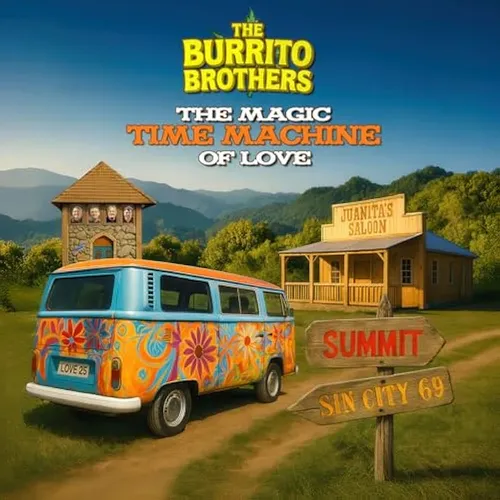
There was an interview with lead vocalist/keyboardist Chris James who is part of the modern-era Burrito Brothers’ line-up with Tony Paoletta (pedal steel), Peter Young (drums) and Steve Allen (guitar/vocals).
The band recently released The Magic Time Machine Of Love (TLAK) which includes appearances by alums of the original Flying Burrito Brothers: Jon Corneal (drums) and Ian Dunlop (bass) as well as contributions by Al Perkins (pedal steel) and Bob Hatter (guitar).
The collection of 12 tracks — plus two tracks featuring excerpts from a 1972 Gram Parsons interview — is a mix of originals, interesting covers and two archival Burrito Brothers songs not written by the current members.
The two constant characteristics of the band — no matter what name they go by — is personnel changes over the years and being true to their cosmic country rock roots.
The Flying Burrito Brothers trace their roots to 1967 when Dunlop and Mickey Gauvin (drums) — who were part of the International Submarine Band (ISB) with Parsons — formed the group. The initial line-up never recorded. Upon leaving the ISB, Parsons did a brief stint with The Byrds and was on the legendary Sweetheart of the Rodeo album in 1968.
Parsons left The Byrds late in the summer of 1968 and multi-instrumentalist Chris Hillman would follow shortly thereafter. After Dunlop and Gauvin allowed Parsons to use the Flying Burrito Brothers name, Parsons formed the “classic” lineup along with Hillman, “Sneaky” Pete Kleinow (pedal steel) and Chris Ethridge (bass).
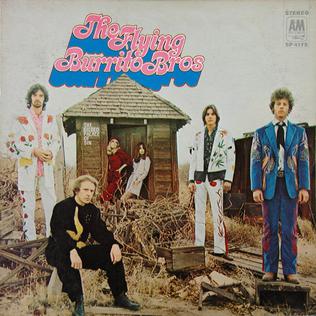
Blending country and rock with a tad of psychedelia, they became one of the pioneers of country rock and their debut, The Gilded Palace of Sin — which was released in early 1969 — remains one of the most influential albums of the genre.
Parsons left the band in 1970, opting to go solo, but the group, despite frequent personnel changes, continued to record and tour.
The latest effort is an adventurous cosmic-Americana collection of tracks bridging the past and present.
Now based in Nashville, the group selected some curious covers, including a country-soul take on “A Whiter Shade of Pale,” Hamilton Camp’s “Pride of Man” — closer to Quicksilver Messenger Service than Gordon Lightfoot — The Beatles’ “What Goes On, ” Jesse Colin Young’s “Peace Song” and a tasteful version of Timothy B. Schmit’s “Right Where We Belong.”
Embracing modern studio technology, the Burritos used AI-extracted vocals from Parsons on “Pride of Man” and a Burritos archival track, “More and More.”